
How Long Do Water Heaters Last? For…
How long does it take to drain a water heater?

Draining a water heater is one of those things that sounds more intimidating than it actually is. Timing is important, that matters whether you’re doing a routine flush to remove sediment or replace the entire hot water tank entirely.
If you’ve noticed your water heater is making a strange knocking sound or hot showers are shorter than usual, it’s most likely a good time for a flush. However, you may think how long will this take?
Short answer
On average, it takes between 20 – 60 minutes to make a complete drainage on a standard residential water heater. That being said, ‘draining’ is just part of the process. When factors such as preparation and refilling the tank are taken into account, you should set aside about 1.5 to 2 hours for the entire process.
Factors that affect draining time
Not all tanks are created equal, and some tanks emptied at different speeds or velocities. Several variables can turn a 20 minute drain into a very draining process.
- Tank Capacity: A 40-gallon tank will naturally drain faster than a large 80-gallon unit.
- Sediment Buildup: This is the biggest x factor. If you haven’t drained your tank in years, calcium and mineral deposits can clog the drain valve, which can really slow down the process.
- Hose Length and Diameter: A short, thick garden hose will move water much with more velocity than a 50-foot hose, that is pure physics at display.
- Air Pressure: If you don’t open a hot water faucet somewhere in the house (or the T&P relief valve), a vacuum forms inside the tank, significantly slowing the drainage.
Pro-Tips for a Faster Drain
If you’re looking to get back time back quickly, take the following steps into account.
- Open a Faucet: Head to the highest floor in your house and turn on the hot water side of a sink. This lets air into the system and helps the water “glug” out faster.
- Check for Clogs: If water isn’t coming out of the hose, there might be a “pebble” of sediment blocking the valve. Carefully poking a small wire into the valve (with the hose off) can sometimes break the blockage.
- Use a Shorter Hose: If possible, drain the water into a floor drain or a nearby bucket rather than running a long hose across the house.
Safety Warning: Water inside the tank can be scalding hot. Always turn off the heating element several hours before draining, or be extremely cautious when handling the hose and drain valve.
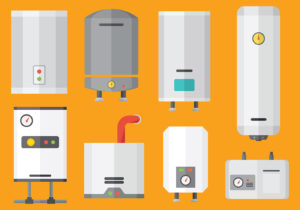
Traditional tank (Electric vs Gas)
The draining speed or time is usually the same for both the electric and gas water heater, however the recovery time (how long it takes to have hot water again after refiling) is different:
- Electric: Takes longer to reheat due the elements needing to heat the entire volume of water from scratch
- Gas: In general faster at reheating because of the high-output burner.
- Drainage Factor: Electric heaters are more inclined to ‘dry firing’. If you turn the power back on before the tank is completely full again, the upper heating element will be burned out in seconds.
Tankless Water Heaters
In the traditional sense a tankless unit is not drained, there is only 1 – 2 quarts of water within the heat exchanger.
- The process: Instead of a long drain, you perform a descaling flush
- Time: For about 45 – 60 minutes you need to use a small pump to circulate a food-grade white vinegar solution through the tankless unit.
- Overall time: Would be around 1.5 hours, mostly the pump doing the work while you’re waiting.
Hybrid (Heat Pump) Water Heaters
These types of water heaters are often taller and more complicated.
- Drainage factor: Since these water heaters are highly efficient, they usually have more sensitive sensors and condensate drains.
- Location: These are often tucked into tight utility closets or basements where access to drainage is challenging, which could add additional time to the entire process.
Point of use (Mini Tank) Heaters
These units are small, usually between 2.5 to 7-gallon tanks that can be found under kitchen sinks.
- Time: Very quick usually under 5 minutes
- Constraint: Since they are mostly in cabinets, you usually have to use a bucket rather than a hose, which means it would take a bit more time since you have to empty the bucket a few times.
Down below is a summary of the different types of water heaters and the time taken to drain them.
| Heater Type | Drain/Flush Time | Reheat Time | Total Project Window |
| Standard Gas Tank | 20–40 Mins | 30 Mins | 1.5 Hours |
| Standard Electric Tank | 20–40 Mins | 60 Mins | 2 Hours |
| Tankless (Descaling) | 60 Mins (Circulating) | Instant | 1.5 Hours |
| Hybrid Heat Pump | 30–50 Mins | 60+ Mins | 2.5 Hours |
The Bottom Line
While the actual water flow usually drains within an hour, there is no need to rush the process. Taking time to do a thorough flush once a year is highly recommended as it can extend the lifespan of your water heater, which makes a few hours of maintenance a very good and feasible investment.
If you need help with draining your water heater, and don’t feel comfortable doing it yourself, then call Water Heater Fixteam. We’re nationwide but locally near you.
Call Water Heater Fixteam today, and get instant warm water once again.